
The Hotel

Ask people if they like hotels and most people will give you a hard ‘yes’ or a hard ‘no’. People generally either like the broad institution of hotels or they don’t. Some people don’t sleep well in a bed that isn’t their own. Some people can’t settle in a place other than where they settled.
I am not one of those people. I like hotels. Not all of them. Not equally. But I like hotels. I just do.
As I’ve come to discover, I’m not the first writer with a soft spot for transient lodging. Faulkner, Fitzgerald, and Hemingway, all had a thing for hotels. Charles Bukowski was all but defined by his penchant for gritty accommodations in Los Angeles and elsewhere. Tennessee Williams wrote “A Streetcar Named Desire” in a New Orleans hotel.
Writers, for whatever reason, seem to like being residents of some duration in places where others are but brief guests.
I came to have my affinity for hotels long before last fall’s cliff dive into writing, but it has swelled into a late love of sorts. A requiting. An autumn romance.
It was first seeded a half-century of springs ago.
I grew up in the hospitality business. Or in a hospitality business rather.
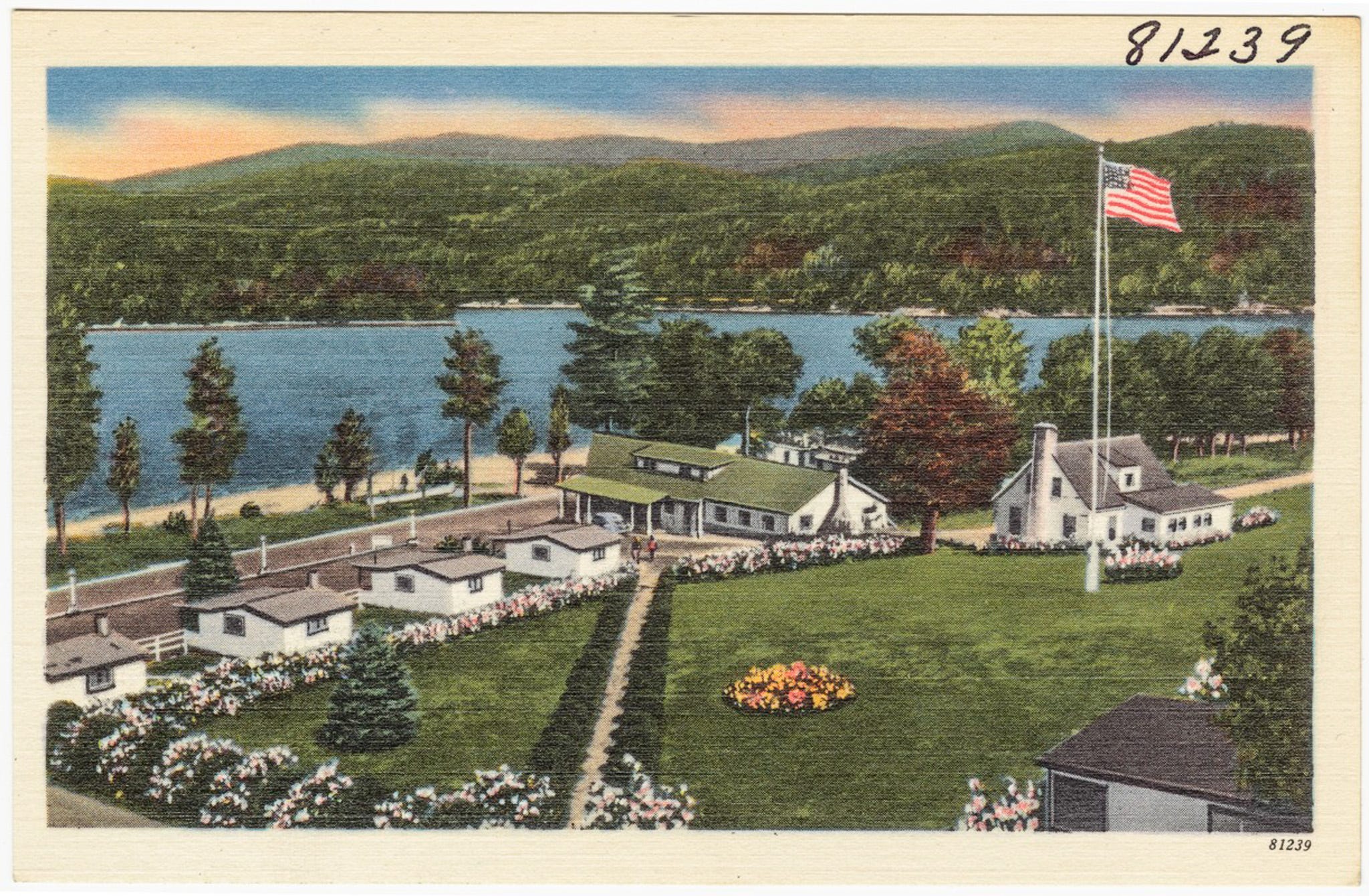
My grandparents were innkeepers. Their livelihood was made from the keeping up of a collection of small cottages arrayed on a slope of land overlooking a mountain lake.
The cabins had been there for decades before my grandparents bought the property.
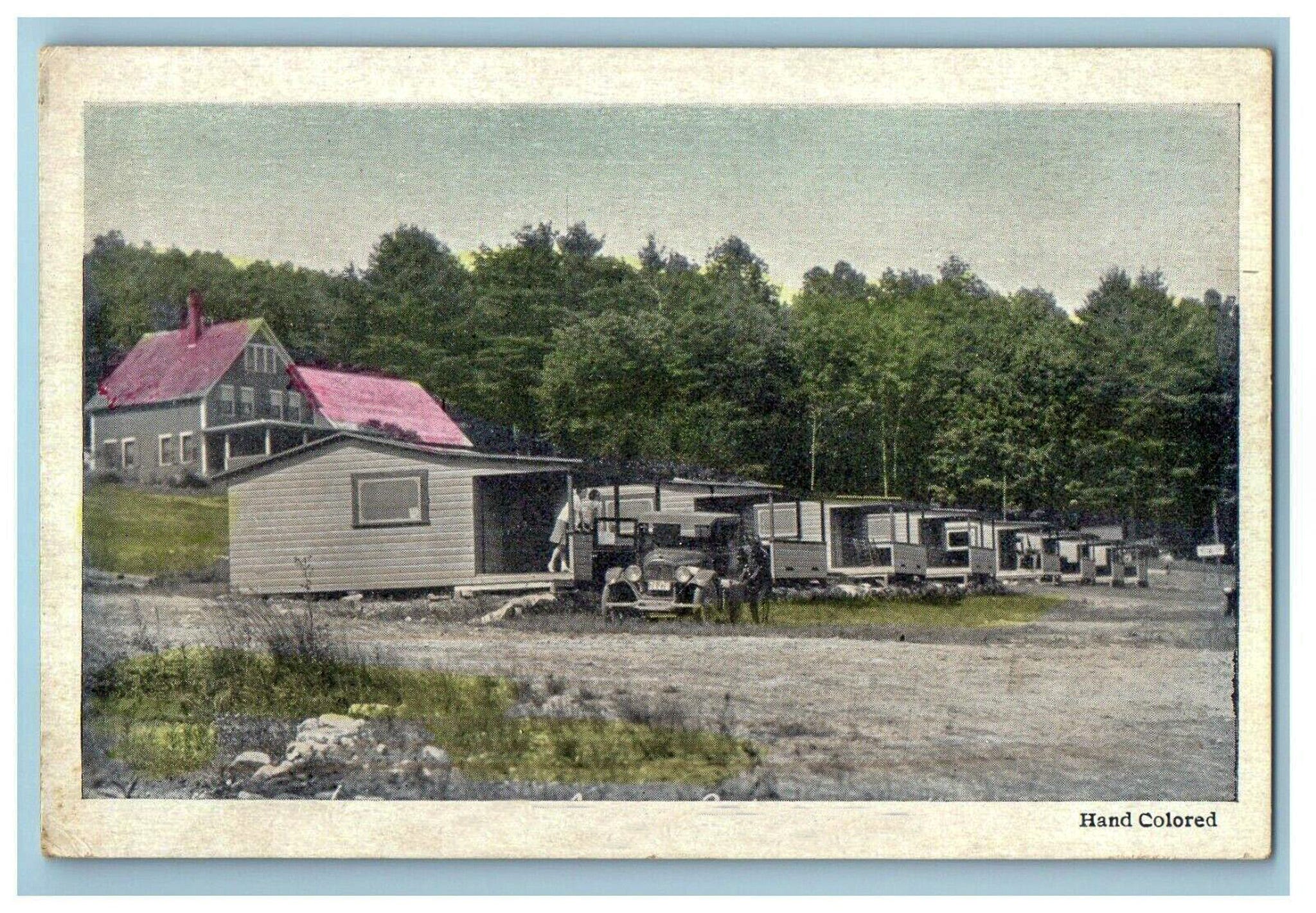
The above picture was taken in the early 1900s. It could have been taken in 1940, ‘60, or ‘80. The only thing that would have noticeably changed in the picture is the car.
The cabins were basic affairs - and that was their allure. The majority were barely larger than the size of a living room. Inside was a single living space with two murphy beds which could be folded up into the wall during the day to make the place feel airy and open.
Each cabin had a wood stove which first-time guests would invariably load up on a brisk night as if they were feeding the boiler of a steam locomotive. The little pot-bellied stove would take to the assignment with gusto and promptly take the chill off the room as the inhabitants contentedly drifted off to sleep... but then, as they slept, the wood stove, being, after all, a wood stove - and a fully loaded one at that - would continue chugging right along as asked in its assigned mission of producing heat.
At some point in the dead of night, the inhabitants would wake up in a microclimate which had somehow gone from ‘Cozy in Aspen’ to ‘Steel Foundry in Iron Country’; and without fail, that discovery would drive them straight out onto the porch in their underwear as they muttered and cursed and tromped back in and out opening windows… which would then make the cabin cold again within a matter of hours as the stove (which they had overloaded but then not fed) burned through the last of its fuel.
The ones that came back the following year would know to throw a couple logs in the stove rather than enough for an entire log cabin.
The cabins, euphemistically, were rustic. They were just simple and unadorned and basic. They were getaways for working class families for whom the ‘getting away’ was the splurge.
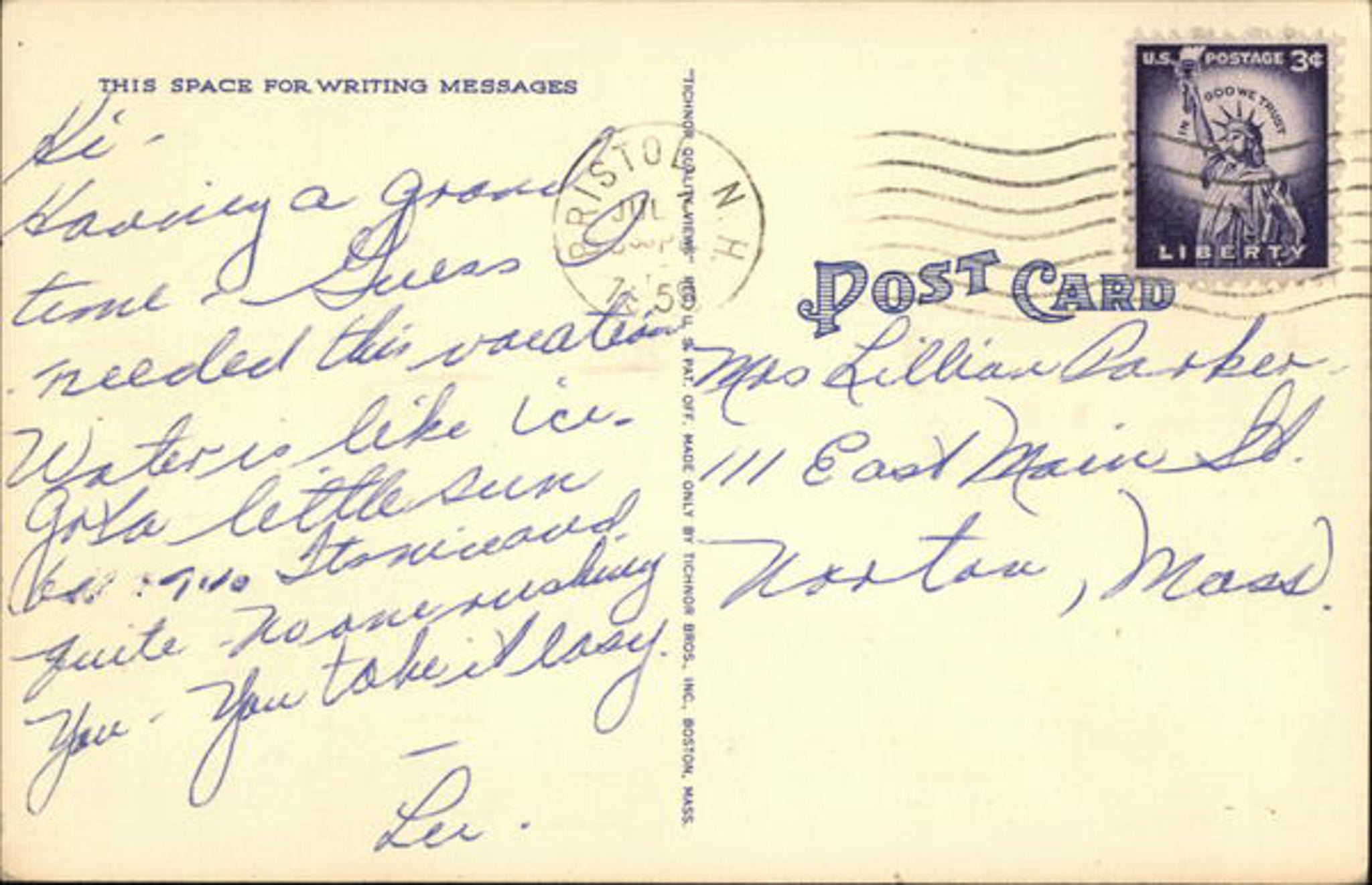
(The water was indeed like ice until at least early August. Mountain springs will do that to a lake.)
Most families came back year after year. Some had already been coming for decades when my grandparents bought the place. Many had been coming for decades by the time they sold.
Most came first as a couple and stayed in one of the one-room cabins. Most then went on to start families; and as they did, they invariably came back but with a new love of the place as now a family vacation spot rather than a romantic getaway.
By the time a decade had past, the only thing that would have changed about their annual visits was the row of cabins they stayed in. Their first cabin had been in the front or middle row; their 10th had been in the back row where the cabins were larger and had two bedrooms and sometimes a third. And that would be their row until their station wagons emptied of passengers now grown - and usually it stayed their row until the bedrooms filled up again with adult children and grandchildren.
That was my grandparents’ property. That was the nature of it. It was special and precious… and it couldn’t possibly have been more different than where I actually lived.
I grew up in New York City. I lived in an apartment building. I went to a public school. From Labor Day until the end of the school year, I was the citiest of city kids. I saw little grass. I spent recesses out on a blacktop schoolyard. Come the end of the school year though, oh, how things changed.
For me, the final bell on the last day of class didn’t just mean school was out for the summer; it meant my city life was out too... School would end on a Thursday or Friday and by Saturday, I’d be a country kid.
Set among the cabins my grandparents owned was their actual home. It sat dead square in the middle of the property. The center driveway up from the road led straight to it. Newly arriving guests saw no more of it than the little office where they checked in and checked out, but back through the door to the left was a sprawling kitchen… and past the simple registration desk and the wire racks of postcards was a hall which led first to a staircase and then to a living room. Up the stairs were bedrooms and a bathroom with a clawfoot tub. The one at the top of the stairs across to the left was mine.
That is where I spent my summers. A place of basic accommodation frequented by people for whom stays there had at least once been a luxury.
I grew up in a place that fulfilled the romantic, sentimental conception of lodging: a place where guests feel comfortable, relaxed, happy to be there, and then, connected to in ways which are personal and important.
That is the soul of an inn. A place away comfortable beyond its comforts.
Most of the cabins didn’t even have a shower. They had beds and a beach and a porch to sit on. They fit into budgets. They were the backdrops for moments and memories and pictures taken on film that had to be sent away to get developed.
Years ago, the people who bought the property and ran it for two decades themselves sold it to investors. They turned the cabins into condos and sold them off as individual properties. Every single one sold to a family that had been coming for years.
There is something to be said for comfortable hotels with modern amenities and nice pools; but there is also something to be said for places of accommodation which are weathered and have seen the passage of time... places attended to by people who care about them and visited by people who feel attached to them.
All connections are human connections. Some places are just places to stay. Some are something more. Some are invested with a currency by the people who work there which I can’t explain but know when I feel it.
I like that feeling. It feels like home.
Hotels and me, ours is a love with a long history.
As a writer now, that long affection has been renewed.
There’s a place I’ve become a little attached to recently. I’ve written in it. I thought maybe I’d write about it too.
Add ‘The Hotel’ to our growing little collection of series’… I’ll introduce you to its protagonist in my next installment.
You grandparent’s cabin campground is my dream job. There are still some of these up where I live and I dream of being able to buy and run one (a girl can dream).
I also have a fondness for hotels. When I was barely earning a living, living in a new state, and sad, I would save up credit card points until I had enough for a night at a cheap hotel--usually somewhere an hour or two away, near a lake, woods, or beach, and I would take myself there and just chill for a night, in a place that was away from my crappy apartment, memories, and work.
Nostalgia and romantic simplicity. Both help make these tough days easier. Mike, you really are finding your wheels again.